Are we ok with the fact that our kids are confessing to an AI?
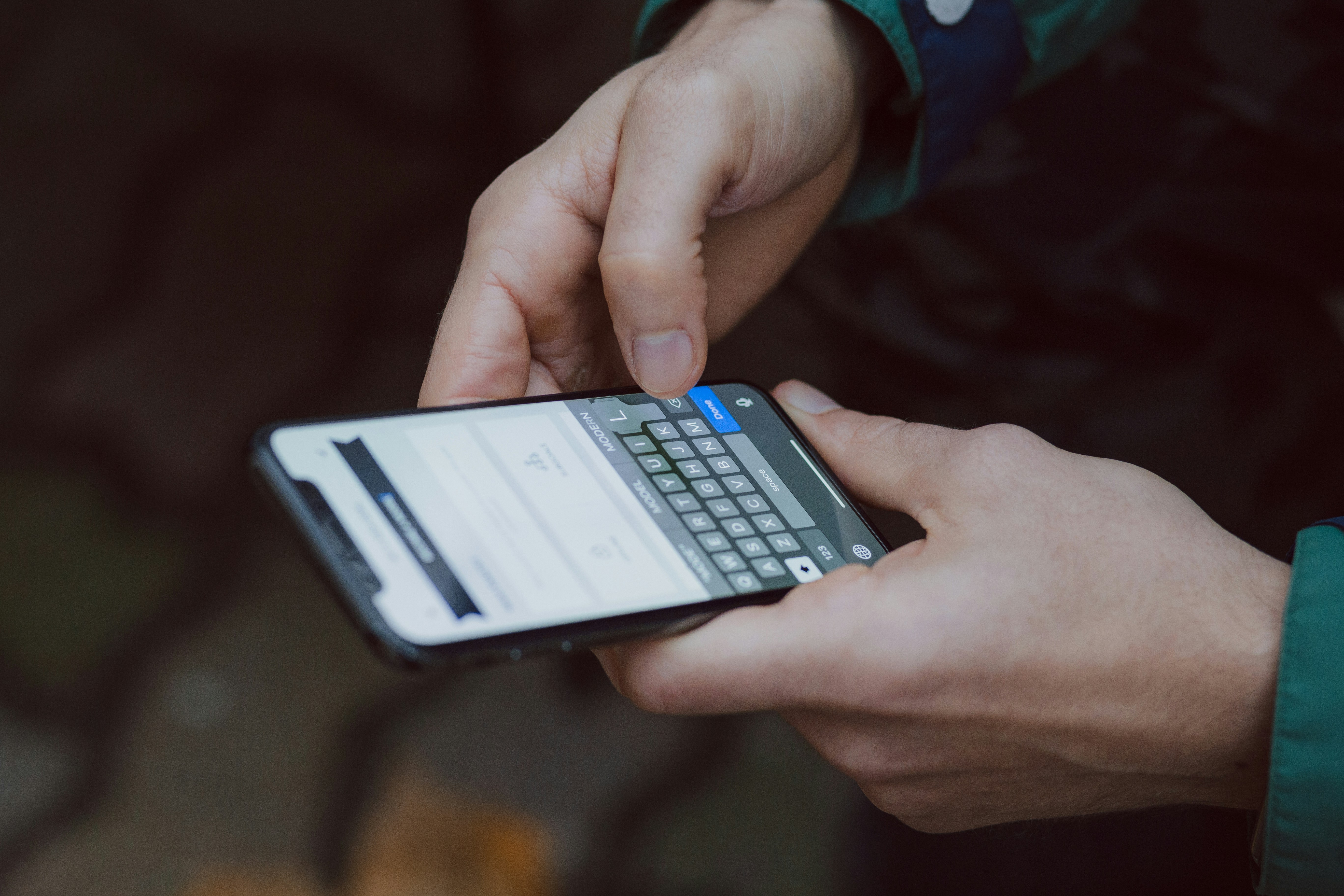
I took a peak at the point where technology meets the soul. Left with more questions.
My daughter once asked AI to offer advice on her then relationship with a boy- the emotional part. I asked why. ‘Well, I heard my friends’ opinions and your opinion, I just wanted to see what version does IT give’. Meanwhile, her girl friends are doing tarot spreads and then uploading photos of the cards for the AI to give the reading.
Recent data tells us that 80% of teenagers today have admitted to having conversations with an AI at least once. Pretty high percentage. But the real story is behind it.
Because of the manufacturing of AI, we humanity are now at a historical crossroad. Impacting everyone. Kids very much involved. The diary under the mattress is either gone or being shared with something that doesn't breathe.
An AI is the new friend, the new therapist, the new hero. Kids are turning to chatbots for validation ("Am I pretty?"), emotional triage ("What should I do if he didn’t text me back?"), deep existential despair ("I feel down, my group isn’t talking to me anymore, my life is over"), and digital divination.
I personally get it. Human interaction is messy. We roll our eyes. We bring our own baggage, our own exhaustion, and our own biases. An AI doesn't sigh when it hears the same friend drama for the third time in a week. It doesn't get tired. It doesn’t judge. It responds with an infinite, supply of sympathy, validation, and logic. And sometimes it hallucinates. Because, of course, it doesn’t have all the answers. But the teen doesn’t know that. For them navigating the chaotic, high-stakes social landscape of modern youth, a chatbot can feel like the only listener who has all night. And all it’s attention.
As we watch this unfold, we’re left with a question that isn't easy to answer: Are our children seeking out these synthetic sounding boards to fulfill a genuine emotional need we aren't meeting, or are they simply collecting one more opinion?
In some ways, asking an AI is just the digital evolution of old teenage rituals. Kids have always consulted magic 8-balls, horoscopes, and teen magazines for answers about themselves. In that light, AI is just the ultimate, hyper-personalized oracle.
When a teen says, “I just wanted to see what version IT gives,” they might just be treating the AI as a neutral third party—an intellectual exercise. But where does curiosity end and reliance begin? If a child turns to a chatbot every day because human relationships feel risky, dismissive, conditional or just unavailable, is the machine still offering just another take or is it starting to fill a vacuum? A vacuum we left behind in our hyper-connected, hyper-busy lives?
This brings me to another question:
Do we give our children the agency to assess whether the AI is genuinely helping them? Can they look at an AI's response, compartmentalize it, and say, "That's interesting to consider, but ultimately non-reliable" or are they taking it all in?
We as adults struggle to separate algo persuasion from the objective truth. Expecting a teenager to do so effortlessly feels like a heavy ask. It is not impossible, but hard to convince a teenager today that the AI just mirrors them and is designed to keep the conversation going. It’s not the Universe wisdom, the wise guru, the big brother or the master of therapy. It’s not even the ‚know-it-all’ master and possibly it will never be. But when an AI responds with beautifully formatted empathy, it carries a psychological weight to a developing mind.
Do our children truly understand what AI is? Do we understand what they understand?
We are the first generation of parents and mentors watching kids grow up with synthetic intimacy at their fingertips. Its power, real capabilities and how it will change the world is without certainty.
So I leave you with one last question: what happens to the human heart when the place we go to be understood is not human?